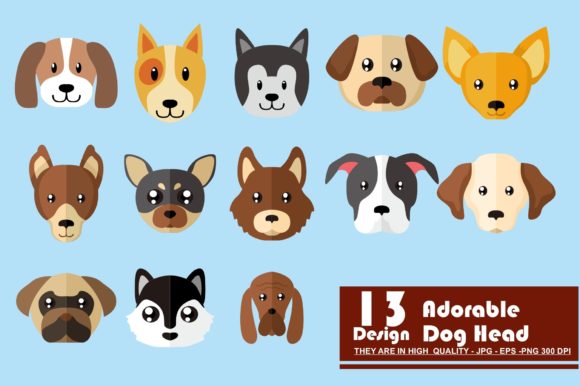
Collection of Various Types of Dog Head
A Designer’s First Look: Friendly, Flexible, and Full of Personality
When I opened Collection of Various Types of Dog Head, my first thought wasn’t “cute”—it was “usable.” As someone who’s stitched hundreds of dog-themed projects for Etsy sellers, boutique baby lines, and custom apparel shops, I’ve seen how easily “adorable” becomes “unstitchable.” This collection avoids that trap. The heads are expressive but not overly detailed—clean outlines, balanced proportions, and consistent line weight across all variants. There’s a gentle whimsy in the expressions (a tilted ear here, a soft eye curve there), but nothing so stylized that it loses recognition at 3 inches tall on a tea towel or 1.5 inches on a baby onesie. It feels like a set built for real-world embroidery—not just screen display.
Where It Shines: Real Projects, Real Customers
Last week, I prepped a custom embroidered tote bag for a local pet rescue’s fundraiser—canvas base, medium-weight stabilizer, standard 4×4 hoop. I used one of the medium-detail dog heads from Collection of Various Types of Dog Head as the centerpiece. It stitched cleanly in under 8 minutes, held crisp edges on the canvas weave, and read instantly from three feet away. Customers loved it—not just because it was a dog, but because it felt *handmade*, not clip-art. That’s the quiet strength of this collection: it supports storytelling. A French bulldog head on a linen apron for a bakery owner? Yes. A scruffy terrier variant on a holiday pillow cover for a vet clinic gift set? Absolutely. Even the simpler silhouettes work beautifully as subtle repeats on kitchen towels or as applique elements on baby blankets.
I also tested it on sweatshirt fabric—medium-pile fleece—and paired it with a satin stitch border and minimal fill. No puckering. No thread breaks. The EPS Edit File let me adjust spacing between ears and eyes to better suit the thicker fabric’s drape, while the SVG handled clean vector scaling for a digital mockup I sent to a client. For Etsy sellers building listings, that flexibility is gold: one design, multiple applications, consistent brand tone.
Where to Pause—and Why
This isn’t a “drop-in-and-stitch” file for every scenario. On thin fabrics like rayon challis or lightweight cotton voile, I’d skip the denser variants entirely—or reduce stitch density manually before loading into my machine. The more detailed heads include small interior contours (like muzzle shading or ear folds) that can blur or distort without heavy cutaway stabilizer. Similarly, on stretchy knits (think toddler t-shirts or performance tees), I’d opt for the cleanest silhouette version and add a light tear-away + iron-on combo. Curved surfaces—like structured caps—require careful hooping and possibly slight simplification; the original files don’t include cap-specific adjustments, so test stitching on scrap first.
Dark fabrics demand attention too. The PNG transparent background is great for mockups, but when stitching black thread on navy twill, some of the finer interior lines disappeared. I swapped to cream thread and added a narrow satin outline—problem solved. And while the JPG preview gives a quick sense of layout, never rely on it alone: always check the actual stitch path in your embroidery software. Some corners tighten unexpectedly, especially in the more angular breeds.
What It Adds to Your Finished Product
- Visual appeal: Instant warmth and approachability—ideal for personalized gifts where emotional resonance matters more than photorealism.
- Stitching clarity: Clean transitions between satin and fill stitch areas mean fewer stops, less trimming, and smoother finishes—even for intermediate stitchers.
- Product value: Customers consistently pay more for embroidery that looks intentional, not generic. This collection reads as curated, not mass-downloaded.
- Brand consistency: Whether you’re selling handmade pet bandanas or running a craft studio with seasonal collections, these heads hold tone across mediums—patches, prints, and stitched items all feel like part of the same visual family.
- Giftability: I’ve shipped dozens of baby onesies with the smallest dog head variant—it fits perfectly on the chest, reads clearly after washing, and parents comment on how “sweet but not cloying” it feels.
Practical Notes Every Embroiderer Should Run Through
Before committing to Collection of Various Types of Dog Head in a live project, do these six things:
- Test stitch on scrap fabric matching your final substrate—especially if using textured, dark, or stretchy materials.
- Check thread color contrast in both light and dark mockups (use the PNG and JPG side by side).
- Review stitch density in your editing software—trim fill areas slightly if working below 3.5 inches wide.
- Confirm your hoop size matches the largest variant you plan to use; none exceed 4.2 inches, but verify before digitizing.
- Inspect small details (like nostrils or inner ear lines) at 200% zoom—if they vanish in your software preview, they’ll likely vanish on fabric.
- Double-check licensing: this is a Graphics download intended for Crafts, so confirm whether commercial use of finished embroidered products is permitted before listing on Etsy or supplying boutiques.
Final Thought: Not Just Another Dog Design
Collection of Various Types of Dog Head doesn’t try to be everything. It’s not hyper-realistic. It’s not minimalist enough for high-end monochrome branding. But it hits a sweet spot many designers overlook: practical charm. It stitches reliably, scales gracefully, and carries emotional weight without demanding perfection from the maker. For the craft business owner juggling five custom orders before lunch, the Etsy seller refreshing their bestsellers, or the hobbyist stitching a heartfelt gift—it’s the kind of embroidery file that makes you say, “Yes. This will work.” And in our world, that’s the highest compliment.