Book and Poodle Dog: A Thoughtful Embroidery Design for Real Projects
First Impressions: Charm with Quiet Confidence
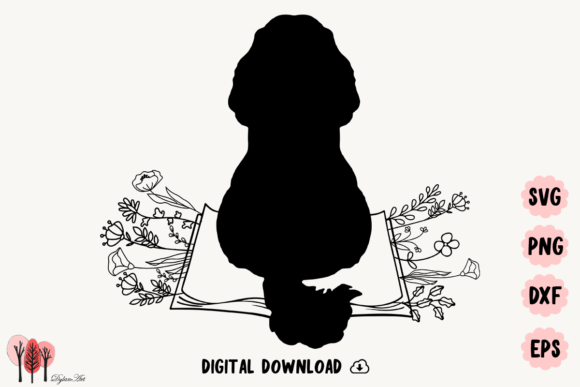
When I opened Book and Poodle Dog, I didn’t see just another whimsical graphic—I saw a quiet narrative. The pairing feels intentional: the soft curves of the poodle’s silhouette resting beside an open book, not too busy, not too sparse. It’s friendly without being cutesy, literary without being stiff. As a designer who regularly selects embroidery files for client work—custom baby onesies, boutique aprons, small-batch tote bags—I immediately asked: Will this hold up in thread? The answer depends less on flash and more on balance—and Book and Poodle Dog strikes it well.
A Real-World Test: Stitching It onto a Linen Tea Towel
Last week, I prepped Book and Poodle Dog for a small-run kitchen collection—linen tea towels for a local craft fair. Linen’s texture is forgiving but unforgiving at once: it shows skipped stitches, reveals uneven fill density, and highlights any awkward line weight. I used a medium-weight cutaway stabilizer, tested three thread colors (navy, charcoal, and cream), and ran the design at 4.5" wide—the sweet spot for visibility and clarity on a flat, woven surface. The result? Clean satin stitch outlines around the poodle’s head and book spine, gentle fill stitch in the body and pages, and just enough running stitch detail to suggest paw pads and page edges without overcrowding. Customers responded warmly—not because it screamed “look at me,” but because it felt like something handmade, considered, and quietly joyful.
Where It Shines—and Where It Needs Care
Book and Poodle Dog works especially well for:
- Personalized gifts: Embroidered on baby blankets or toddler backpacks, it reads as tender and literate—not trendy, but timeless.
- Boutique apparel: On organic cotton sweatshirts or relaxed-fit tees, its moderate scale and balanced negative space keep it from feeling cluttered.
- Embroidered patches: The clean outer shape and defined internal divisions make it ideal for iron-on or sew-on patches on denim jackets or tote bags.
- Nursery and holiday decor: Paired with subtle fabric choices (like oatmeal linen or heather grey terry), it adds warmth without overwhelming a room.
But be thoughtful with placement and execution:
- Hoop size matters. If your machine’s smallest hoop is under 4", test how the book’s spine or poodle’s ear translates—you may lose fine definition.
- Stretchy or thin fabrics demand stabilizer strategy. On lightweight knits or baby rib, use tear-away + light cutaway to prevent puckering near curved lines.
- Dark backgrounds need contrast checks. That delicate running stitch detail disappears on navy or charcoal unless you choose bright white or pale yellow thread—or adjust density manually before stitching.
- Caps and curved surfaces require repositioning. The design’s horizontal orientation isn’t ideal for front-of-cap placement without slight vertical compression or cropping—review your layout in a printable mockup first.
Design Integrity Meets Commercial Practicality
As an Etsy seller and embroidery product reviewer, I pay close attention to how a design affects perceived value—not just in labor, but in presentation. Book and Poodle Dog elevates a simple tote bag into a conversation starter. It makes a plain sweatshirt feel curated. And for craft business owners building brand consistency, its tone fits cleanly alongside botanical motifs, minimalist typography, or soft-toned illustration bundles—no jarring dissonance.
That said, don’t assume licensing covers resale of finished items or digital redistribution. The listing mentions SVG, PNG, DXF, and EPS files plus 300 DPI resolution—but doesn’t clarify commercial use rights. Before adding Book and Poodle Dog to your shop as a ready-to-embroider digital embroidery file or bundling it into a craft kit, confirm whether it’s licensed for commercial embroidery projects or limited to personal use.
Designer Notes You’ll Actually Use
Here’s what I do before committing Book and Poodle Dog to a real project:
- Test on scrap fabric first—especially if using textured weaves or blends.
- Check thread color contrast by stitching a 1" sample on both light and dark fabric swatches.
- Review stitch density visually in your embroidery software—if fill areas look overly heavy, reduce density by 5–10% for breathable fabrics.
- Confirm hoop size compatibility—measure the design’s widest point against your available hoops.
- Inspect small details in zoom view: are the poodle’s eye and book’s inner lines crisp enough to translate cleanly at 3x–4x final size?
- Test black-and-white mockups to gauge readability when color isn’t part of the story.
- Use proper stabilizer—cutaway for stable wovens, tear-away for lighter cottons, and fusible + tear-away for knits.
- Verify dual-use fit: does it serve both your personal handmade product goals and your small shop’s commercial needs?
Final Thought: A Design That Earns Its Place
Book and Poodle Dog isn’t flashy—but then, the best embroidery designs rarely are. It’s the kind of graphics asset that builds trust: with customers who appreciate subtlety, with fellow makers who value clean execution, and with your own standards as a designer who chooses every stitch with intention. Whether you’re embroidering a one-of-a-kind baby gift, stocking a boutique shelf, or building a cohesive line of craft business merchandise, this design earns its place not through volume, but through voice. Just remember to test, tweak, and treat it like the thoughtful piece it is—not just another digital file, but a quiet collaborator in your next handmade product.