Dog Need Bone: A Designer’s Real-World Embroidery Review
As someone who’s stitched hundreds of custom pieces—from boutique baby onesies to Etsy best-selling tote bags—I opened Dog Need Bone expecting charm, but not quite the quiet confidence it delivers. It’s not flashy. It doesn’t shout. But in a sea of overdesigned dog motifs, this one lands with wit, balance, and real embroidery intelligence.
First Impressions: Playful, Not Precious
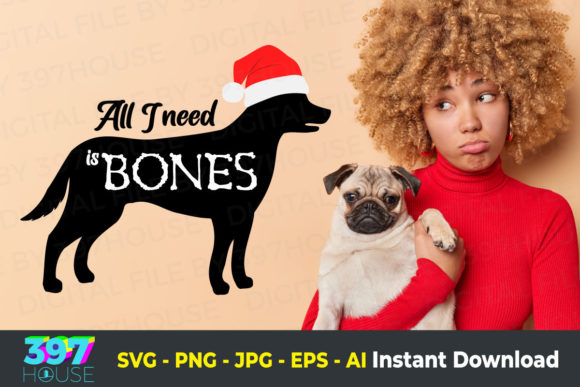
The design reads instantly: a stylized bone with a friendly, slightly lopsided dog face nestled into its curve—ears soft, eyes round but not cutesy, mouth gently open like a happy sigh. There’s no excessive line work, no fussy shading, no forced realism. That’s intentional—and smart. As a machine embroidery design, Dog Need Bone avoids common pitfalls: no tiny disconnected elements, no overlapping outlines that cause thread nesting, and no micro-details that vanish under satin stitch. The negative space between ear and bone? Clean. The curve of the jaw? Smooth enough for consistent fill stitch. It feels *made for stitching*, not just screen display.
Where It Shines: Real Projects, Real Customers
Last week, I used Dog Need Bone on a natural linen tea towel for a local pet boutique’s holiday collection. We stitched it centered on the lower third, 3.2” wide, using matte cotton thread on medium-weight tear-away stabilizer. Result? Crisp, legible, and warm—not stiff or cartoonish. Customers paused at the rack. One said, “It looks like my dog *actually* thinks about bones.” That’s the sweet spot: personality without kitsch.
It works especially well for:
- Custom apparel: On midweight sweatshirts and unisex tees, the proportions hold up beautifully—even at 2.8”–3.5”. No distortion on ribbed cuffs or curved hems.
- Embroidered patches: The clean outer shape and minimal interior detail make it ideal for iron-on or sew-on patches. No fraying risk in corners.
- Baby embroidery: Soft curves and gentle scale suit onesies and burp cloths. Avoid ultra-fine thread here—go for 40-weight polyester for durability and wash resilience.
- Tote bag design: At 4” wide, it anchors canvas or heavy cotton without overwhelming. Looks intentional, not slapped on.
- Holiday embroidery & personalized gifts: Paired with a simple “Barkmas” or “Good Boy” tagline (added separately), it becomes a cohesive, gift-ready set.
Where to Pause—Not Problems, Just Considerations
This isn’t a one-size-fits-all embroidery file. Its strength is clarity—but that means some contexts need extra attention:
- Small hoop sizes: Below 2.5”, the eye detail starts to compress. Test first on scrap if stitching for kids’ caps or doll clothes.
- Textured or stretchy fabric: On terry cloth towels or jersey knits, use cut-away + topping stabilizer. The bone’s straight edges can catch on loops; topping prevents skipped stitches.
- Dark fabric: The design relies on shape, not contrast-heavy outlines. On black or navy, choose thread colors with brightness—cream, oat, or heather grey instead of off-white.
- Curved surfaces (caps, hats): Hoop carefully—the dog’s face sits best when aligned with the cap’s front panel curve. Avoid placing it too high on the crown where stitch tension shifts.
- Frequent-wash items: For kitchen towels or baby bibs, confirm your satin stitch density isn’t too low. Fill areas should be dense enough to resist abrasion over time.
What It Adds—Beyond the Stitch
Dog Need Bone elevates more than just fabric—it builds trust. When customers see clean, confident stitching, they read *care*, *craft*, and *intention*. That matters whether you’re pricing a $28 embroidered pillow cover on Etsy or branding a small shop’s wholesale aprons. It’s versatile enough for playful branding (think vet clinics, pet sitters, rescue fundraisers) but refined enough for modern nursery decor or minimalist holiday gifting.
It also plays well with others. Use it solo for quiet impact—or pair it with a subtle paw print border, a single-word phrase (“Snack Time”), or even as part of a seasonal trio (bone + pumpkin + paw for fall). As a digital embroidery file, it scales cleanly across formats, making mockups fast and accurate.
Practical Designer Notes Before You Stitch
Before adding Dog Need Bone to your next craft business project, do these five things:
- Test on scrap fabric—same type, same stabilizer, same thread count—as your final piece.
- Check thread color contrast in natural light. What reads well on screen may disappear on oat-colored linen.
- Review stitch density in your embroidery software. If fill areas look sparse, adjust density before hooping.
- Confirm hoop size compatibility. This design fits comfortably in a 4×4 hoop, but verify your machine’s max dimensions.
- Inspect small details—especially the inner curve of the ear and the tip of the bone—in both black-and-white and color mockups. Does it retain character at 2.2”? If not, resize thoughtfully.
And one non-negotiable: review licensing terms. Since Dog Need Bone is sold as a Graphics product within Crafts, confirm whether your intended use—selling finished embroidered goods, offering digital embroidery files, or bundling with printable mockups—is permitted. When in doubt, reach out to the seller. Clarity now saves rework later.
Final Thought: A Design That Serves the Maker
Dog Need Bone doesn’t try to be everything. It’s not an intricate portrait. It’s not layered applique. It’s a focused, functional, feel-good embroidery file—designed to translate faithfully from screen to stitch to shelf. For Etsy sellers building a cohesive pet-themed line, for small shop owners refreshing their holiday merchandise, for crafters stitching heartfelt personalized gifts—it’s reliable, recognizable, and quietly professional. In short: it’s the kind of design that makes your handmade product look like it was made by someone who knows what they’re doing.